
06/07/2025
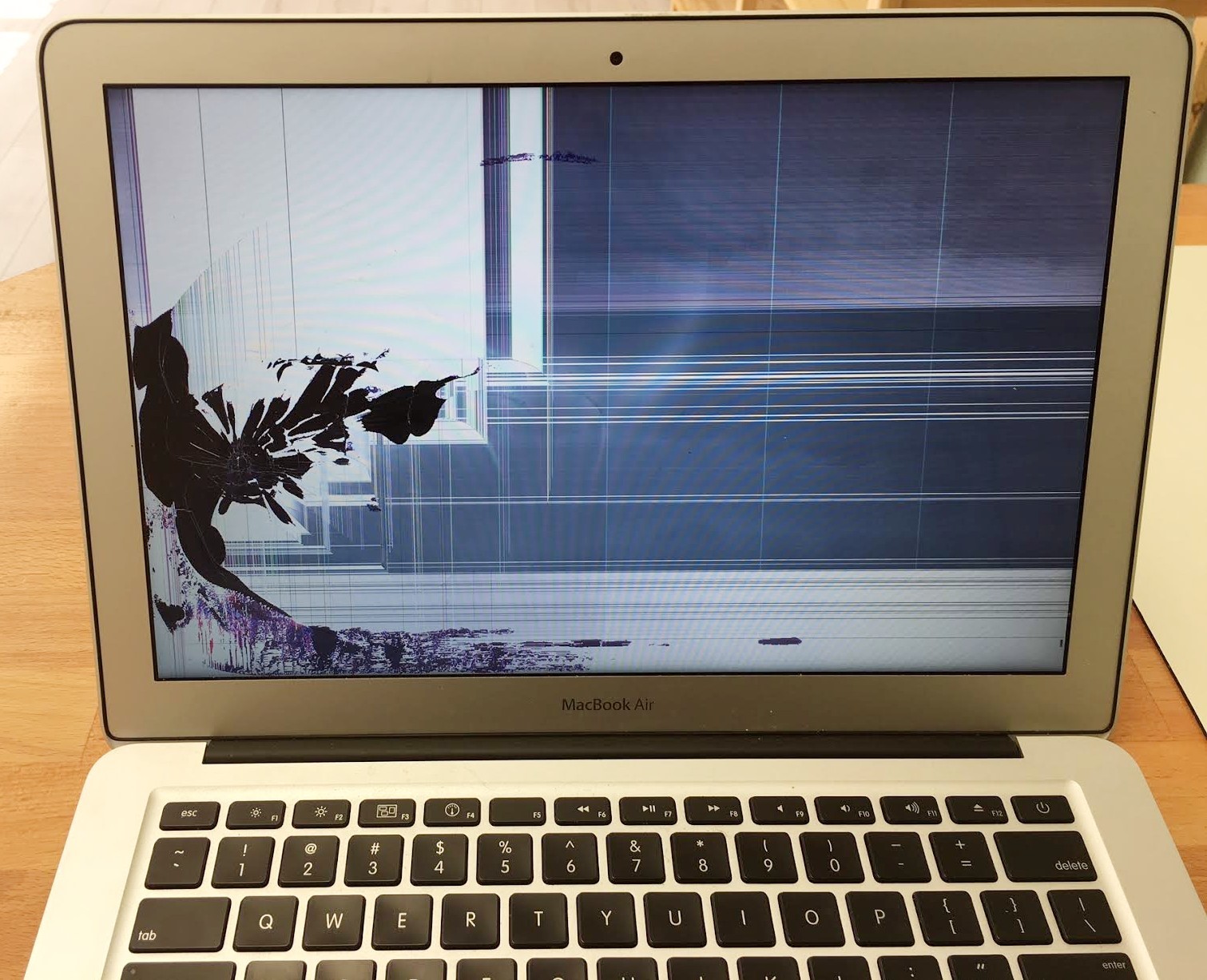
There are few sounds more expensive than a MacBook hitting the floor.
Maybe the screen cracks. Maybe coffee gets involved. Maybe it just wakes up one morning and decides the keyboard no longer believes in the letter E.
Now you have a decision to make:
Do you repair it, or cut your losses and sell it?
There isn’t one answer that works for every MacBook. Sometimes repairing it makes perfect sense. Other times, spending several hundred dollars on an older Mac is basically paying admission to keep owning an older Mac.
Here’s how to make the decision without guessing.
Before you get emotionally attached to a repair quote, figure out what the MacBook is worth in its current condition.
That gives you a baseline.
A newer MacBook Pro with Apple silicon and a cracked display may still be worth quite a bit. An older Intel MacBook with a bad screen, tired battery, broken keyboard, and a port that only works when Mercury is in retrograde is a different story.
The exact model matters enormously.
So does:
Don’t compare your repair bill to what the Mac cost when it was new. Compare it to what the Mac is actually worth today.
This is where a lot of repair-or-sell articles go wrong.
There isn’t one universal Apple price for “broken MacBook.”
Repair cost depends on the exact model, the damaged component, whether other damage is discovered, and whether the Mac is covered by warranty or AppleCare+.
A cracked display, damaged logic board, worn battery, broken keyboard, and liquid spill are completely different repair situations.
Apple provides current repair estimates based on your device and service type. An Apple Authorized Service Provider or reputable independent shop may give you another option as well.
The important part is to get a real estimate for your Mac, not rely on a chart somebody published three years ago and forgot about.
When we look at a damaged MacBook, these are the factors that matter most:
Those five questions usually make the answer much clearer.
Repairing can be the smart move when you have a relatively new Mac and the problem is isolated.
For example, imagine you have a newer Apple-silicon MacBook that does everything you need, has plenty of storage and memory, and is otherwise in excellent shape.
Then the screen cracks.
If the repair is reasonably priced—especially if you have AppleCare+—replacing the screen may be far cheaper than replacing the whole computer.
The same logic can apply to a battery.
If the MacBook is still fast, supported, useful to you, and otherwise healthy, a battery replacement can give it a lot more useful life.
Selling a machine you otherwise love just because of one repairable issue doesn’t always make financial sense.
The math changes when the repair starts eating up a large chunk of the MacBook’s value.
Suppose your Mac is worth roughly $700 when fully functional.
If the repair is $150 and the computer is otherwise great, fixing it is pretty easy to justify.
If the repair is $550—and the machine also has a worn battery, a few years of age behind it, and you were already thinking about upgrading—that $550 starts looking much less attractive.
You’re not just asking:
“Can this Mac be repaired?”
You’re asking:
“Is this the best place to put my next $550?”
Those are very different questions.
Liquid damage deserves special attention because the visible problem may not be the only problem.
A Mac might survive the original spill, get cleaned or repaired, and seem fine.
Then corrosion or damage elsewhere on the board causes another problem later.
That doesn’t mean every liquid-damaged Mac is doomed. It does mean you should be more cautious about putting a large repair bill into one.
If the repair is substantial, compare it carefully against both the Mac’s current value and the cost of replacing it.
And if you’re thinking about selling the damaged Mac instead, check whether your exact model and condition are eligible before doing anything to it.
This part matters if you’re considering selling the MacBook to GoRoostr.
Do not assume repairing it first will increase what we can pay.
It can actually do the opposite.
Under GoRoostr’s current buying policy, Apple devices that have been tampered with, had attempted repairs or replacement parts installed, are missing required parts, or show replacement-part warnings may be ineligible for purchase.
So imagine this sequence:
You have a damaged MacBook.
You spend $400 repairing it because you figure a working Mac must be worth more.
Then you try to sell it to us.
And the repair itself makes the device something we can’t purchase.
That would be an impressively annoying use of $400.
If your goal is to sell the MacBook, check its eligibility before repairing it.
Sometimes.
We don’t use one blanket rule that says every broken MacBook qualifies.
Broken-device eligibility is based on the exact model and condition supported in our live quote catalog.
Some MacBooks have a damaged or broken condition available. Others may not.
If the quote flow shows a condition that accurately describes your Mac, select it and see the current offer.
If your particular problem isn’t represented, contact us before shipping the computer or paying somebody to repair it.
Don’t choose a similar model or a vaguely similar condition just to make the quote form work.
That usually just creates an awkward conversation later.
Age matters, but there isn’t a magic number where every MacBook suddenly becomes unworthy of repair.
A well-specced older Mac that still handles your work may be worth repairing.
A newer Mac with a catastrophic repair bill may not be.
Apple also changes service and parts availability as products move through its vintage and obsolete classifications, so repair options can become more limited as models age.
The better question is:
After I repair this Mac, how much useful life am I actually buying?
If the answer is “probably several more good years,” the repair may make sense.
If the answer is “hopefully it survives until Christmas,” upgrading starts looking better.
A cracked display is one of the most common reasons this decision gets difficult.
MacBook display assemblies can be expensive.
For a newer, high-value Mac, repairing the screen can still make sense—particularly if the machine is covered by AppleCare+ or you plan to keep it for several more years.
On an older MacBook, the display repair may approach a meaningful percentage of the computer’s entire value.
That’s when you should compare:
repair cost vs. current damaged value vs. working value vs. replacement cost.
Not just “How much does a screen cost?”
A battery is different.
Batteries are consumable components. They wear out.
If the only real problem with an otherwise-good MacBook is that the battery has deteriorated, replacing the battery can be one of the easier repairs to justify.
But if the Mac already has several other problems, an aging battery may simply be one more reason to move on.
Your Mac should not slowly become the Ship of Theseus.
This is where the decision can get ugly quickly.
The logic board contains many of the MacBook’s core components. On modern Macs, major hardware is highly integrated, so a serious board problem can make the repair expensive.
If you have a newer, valuable Mac, repair may still make sense.
If the Mac is older and the repair estimate is substantial, selling it in its current condition may be the better economic choice.
Again, get the actual numbers before deciding.
If you have AppleCare+, check your coverage before doing anything else.
AppleCare+ can dramatically change the repair-versus-sell calculation because your out-of-pocket cost for an eligible repair may be much lower than the full service cost.
Paying a relatively small service fee to repair a newer Mac you want to keep can be an easy decision.
Paying a large uncovered repair bill on an older Mac is another story entirely.
Coverage first. Math second.
This one gets overlooked.
Maybe the repair is technically worth doing.
But you’ve already been thinking about a newer MacBook.
You need more RAM.
You need more storage.
Your workflow has changed.
Or you’ve simply had the computer long enough and you’re ready to upgrade.
In that case, spending money repairing the old Mac before replacing it may not be the best use of your money.
Sometimes the accident just forces you to make a decision you were already heading toward.
Thanks, coffee.
Here’s the way I’d think about it:
Repair it when the Mac is still valuable and useful to you, the problem is isolated, and the repair cost is reasonable relative to the years of use you expect to get afterward.
Consider selling it when the repair is expensive relative to the Mac’s value, there are multiple problems, the machine is becoming outdated for your needs, or you were already planning to upgrade.
And if your plan is to sell it to GoRoostr, check the quote before repairing it.
That last part can save you quite a bit of money.
You don’t have to decide repair-versus-sell completely blind.
Get a quote for the MacBook in the condition it’s actually in.
That gives you another number to compare against the repair estimate.
See what your MacBook is worth
Have a MacBook Pro?
Have a MacBook Air?
If your exact damage isn’t represented in the quote flow, contact us before repairing or shipping it.
Sometimes fixing the Mac is the smartest choice.
Sometimes selling it is.
And sometimes the smartest first move is simply finding out what both options actually cost.